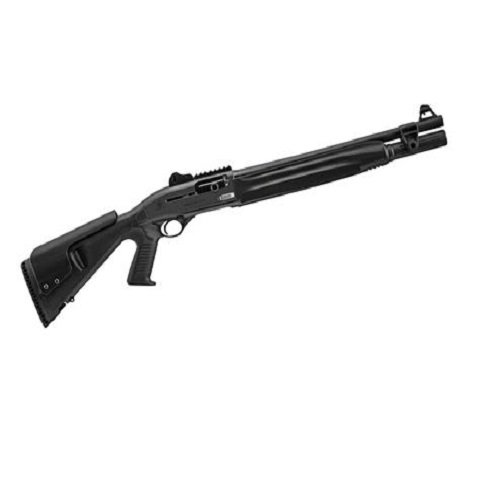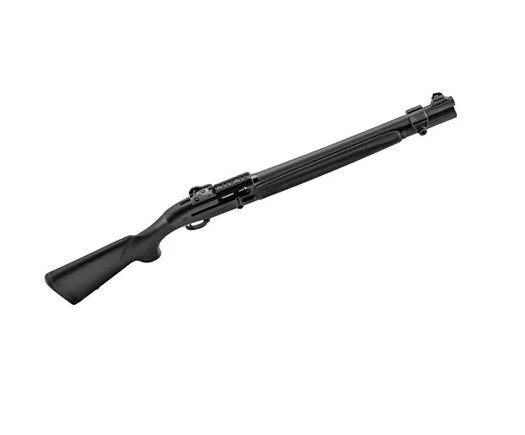
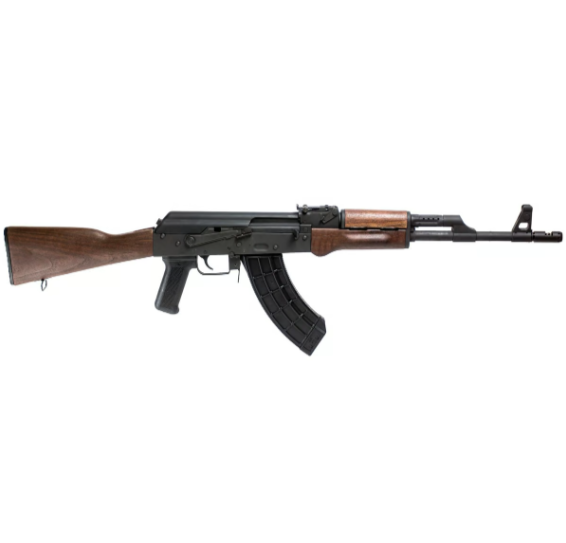
CENTURY ARMS VSKA AK47
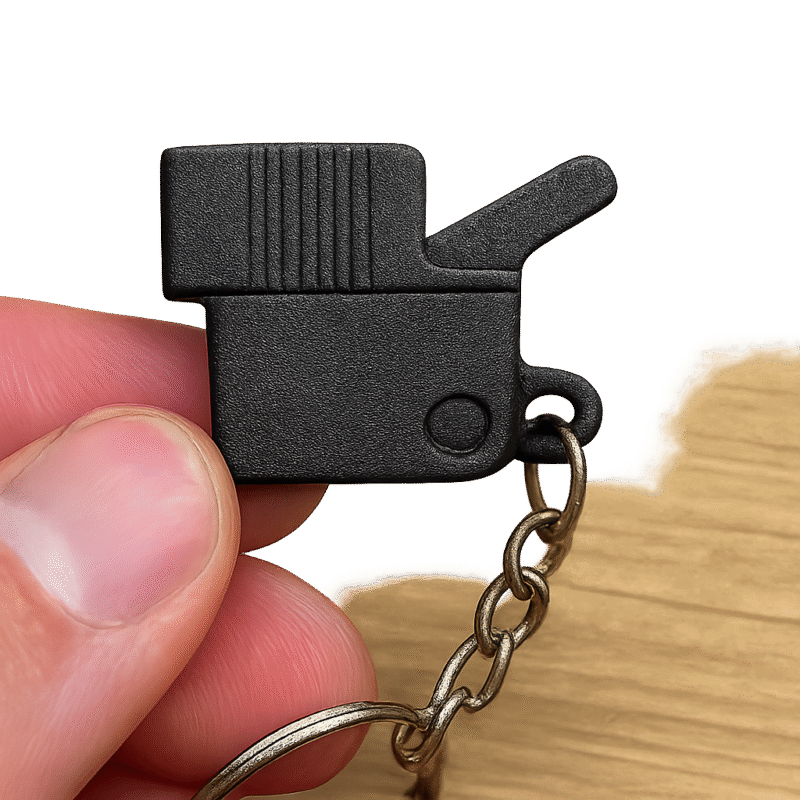
In recent years, the phrase “Glock switch” has moved from niche firearm terminology into mainstream headlines, legislative debates, and federal courtrooms across the United States. Because of the sharp rise in law enforcement seizures, understanding the Glock switch legal status under federal law is critical for legal professionals, researchers, and public policy analysts alike.
Strictly classified under U.S. statutes, these aftermarket components—commonly referred to as auto-sears or conversion switches—carry immense legal weight. Here is an objective, law-based overview of how these conversion devices are treated under current firearm regulations.
A standard, factory-issued semi-automatic handgun functions on a one-to-one mechanical cycle: one pull of the trigger discharges exactly one bullet.
An auto-sear completely alters this internal mechanics. When installed onto the slide of a semi-automatic handgun, the switch applies continuous mechanical pressure to the sear. This prevents the sear from catching the firing pin or striker between shots. Consequently, the weapon enters full-automatic mode, firing continuously until the shooter releases the trigger or the ammunition magazine is completely empty.
Many assume that a component cannot be legally classified as a firearm until it is installed on a functional frame. However, under the National Firearms Act (NFA) of 1934 and the Firearms Owners’ Protection Act (FOPA) of 1986, federal law explicitly addresses conversion components.
According to 26 U.S.C. § 5845(b), the federal definition of a “machinegun” includes:
“…any part designed and intended solely and exclusively, or combination of parts designed and intended, for use in converting a weapon into a machinegun…”
Because an auto-sear is engineered solely to convert a firearm into an automatic weapon, the Bureau of Alcohol, Tobacco, Firearms and Explosives (ATF) enforces a strict policy: the switch itself is legally considered a machine gun. It does not matter if the switch is unattached, broken, or completely separated from a handgun; possession of the raw component alone constitutes possession of an NFA-regulated automatic weapon.
Under the 1986 Hughes Amendment, it is unlawful for a civilian to possess or transfer any machine gun or conversion device that was not lawfully manufactured and registered prior to May 19, 1986. Because aftermarket conversion switches were designed decades after this deadline, there is no legal pathway for an ordinary civilian to possess or register one.
Statutory Category
Rule / Application
Civilian Ownership
Completely prohibited under the Hughes Amendment; grandfathering is impossible.
Federal Classification
Standalone machine gun under 26 U.S.C. § 5845(b).
FFL / SOT Licensing
Only legal for licensed manufacturers (Type 07 FFL) with a Class 3 Special Occupational Taxpayer (SOT) status for military/police production.
Criminal Penalties
A federal felony carrying up to 10 years in federal prison and up to $250,000 in fines.
A standard, factory-issued semi-automatic handgun functions on a one-to-one mechanical cycle: one pull of the trigger discharges exactly one bullet. An auto-sear completely alters these internal mechanics by applying continuous pressure to the sear, enabling full-automatic fire.
Many assume that a component cannot be legally classified as a firearm until it is installed on a functional frame. However, the official Glock switch legal status is defined explicitly by the statutory text of the National Firearms Act (NFA).
According to federal code, the definition of a machine gun includes any part designed and intended solely and exclusively for use in converting a weapon into an automatic firearm. Because of this definition, the Bureau of Alcohol, Tobacco, Firearms and Explosives enforces a strict policy: the conversion switch itself is legally considered a machine gun. It does not matter if the switch is unattached, broken, or completely separated from a handgun; the standalone object carries the same restrictions as a fully assembled automatic weapon.
Under the 1986 Hughes Amendment to the Gun Control Act, it is unlawful for civilians to possess or transfer any machine gun or conversion device that was not lawfully manufactured and registered prior to May 19, 1986. Because aftermarket conversion switches were designed decades after this deadline, there is no legal pathway for an ordinary civilian to possess or register one.
The criminal penalties tied to the Glock switch legal status are severe. Possession of an unregistered conversion device is prosecuted as a federal felony. A conviction can result in up to 10 years in federal prison and substantial fines reaching up to $250,000. Exceptions to these restrictions apply primarily to licensed manufacturers holding a Type 07 Federal Firearms License (FFL) with a Class 3 Special Occupational Taxpayer (SOT) status, producing them strictly for military or law enforcement use.
For detailed documentation on how federal oversight applies to automatic weapons and conversion components, you can review the official regulations listed by the Bureau of Alcohol, Tobacco, Firearms and Explosives (ATF).
Can you buy a Glock switch legally with a standard gun license?
No. A standard state-issued concealed carry permit or clean background check does not permit the purchase or possession of an NFA-regulated device manufactured after 1986.
Does state law differ from federal law regarding switches?
While federal law strictly bans these devices nationwide, many states have enacted supplementary legislation. States like California, Maryland, New York, and Connecticut have added specific state-level felony penalties for possessing automatic conversion parts, allowing state prosecutors to file independent charges alongside federal indictments.
What is the ATF’s current stance on 3D-printed switches?
The ATF applies the exact same legal standard to plastic, 3D-printed, or home-manufactured auto-sears as it does to factory metal switches. If the physical object or digital file is intended solely to facilitate automatic conversion, it is treated strictly as an illegal machine gun under federal code.
Legal Disclaimer: This article is written strictly for educational, informational, and journalistic purposes. It does not constitute formal legal advice. Individuals seeking legal counsel regarding federal firearms statutes or compliance should contact a qualified defense attorney specializing in National Firearms Act (NFA) regulations.
No account yet?
Create an AccountYou must be 18 years of age or older to view page. Please verify your age to enter.
Your access is restricted because of your age.